Jersey AngelJersey Angel by Beth Ann Bauman
My rating: 4 of 5 stars

A great summer read, Jersey Angel will be perfect for by the pool or at the shore.  If you are looking for a plot driven book, this is not for you. Jersey Angel is a slice of life story about a girl who is trying to come to terms with her future, her sexuality, her social status, and life in general.  It could be argued that this is a “regionalist” book, as it does take place on the Jersey Shore, but having friends from the OC, and a frequent traveler to Lake Havasu, AZ, any person who has ever been to a vacation town during those hot summer months should be able to relate, and those who haven’t will get a taste of what “kids” do during those hot summer months.


Angel narrates this book with a frank and honest look at herself, but is not overly introspective. She is coming to understand that she is going to be a community college girl, and that some of her friends will move on, and some will always be on the Shore. She is torn between these two lives. She feels a bit guilty that she doesn’t want more for her life than to be happy (and pretty).  She is paired against few extreme female models in the book, her mother (whom she is on a path to become) and her best friend (who seems to be a bit innocent in the ways of the world, but we see her opening her eyes a bit in the end).  When we meet Angel, she is in the process of developing her own sexuality, and attempts to discover what Love is all about and if it has anything to do with sex at all.


Bauman does not sentimentalize her character nor does she dwell much on introspection. Angel makes mistakes, at one point almost an unbelievable one. Then I see my students (I teach high school English) walking around campus, having OBVIOUSLY made these same mistakes, I gave Angel (and by definition Bauman) the benefit of the doubt.  There are definitely girls who are more sexually active than others, and Angel is one of those. I found it a refreshing read, and finished it in a day.  I was fortunate to have an advance reader copy, and I think once this book becomes available to the general public this week, May 4, 2012, the Goodreads ratings on the book will skyrocket.


*Spoiler Alert?* This book does not wrap itself up in a neat little package. As with life, there are no easy answers (and people make mistakes, have guilt, etc.) and I could tell about 2/3 the way through that I was not going to get a very “satisfactory” resolution. The text is broken into three parts, Summer, Fall, and Winter. The Reader is left to determine what “Spring” will be like for Angel. Many readers prefer a first person narrator that tells the Reader what they are thinking, or tells the Reader what to think and how to feel.  The clever thing about Jersey Angel, and a salute to Bauman’s craft, is that we the READERS are forced to reflect upon how we feel about Angel’s actions, and what she might do in the future. Many readers would say, “I would never to that.” But does that mean someone else wouldn’t? If we are pigeon-holed into reading books about characters that are exactly like us, why read at all? I can say this… I would have been excited (and terrified) to have met Angel in high school, but I wouldn’t have wanted to miss it.


View all my reviews

Looking Back: Favorite book of 2010 "The Magicians"


My persoanl rating: 5 of 5 stars

I was impressed by The Magicians. One of the quotes on the inside calls it "Harry Potter for adults." I would have to say that I agree, the novel does deal with many YA themes yet it is a cross-over novel, Quentin and crew graduate from Brakebills college about half way through.  The Magicians surprised me like Tithe surprised me, in that an urban fantasy can be nearly as rich as the traditional fantasy, though technically Grossman cheated a little by getting his characters to travel into a traditional fantasy world anyway.

Grossman's world is such that it has infinite possibilities, and though his Harvard vocabulary is showing, he still pulls off the college angst pretty well. It is interesting to see our "modern ideals and sensibilities" applied to the traditional fantasy world. He riffs on Rowling, Lewis, and Tolkien, while at the same time taking concepts made popular by those authors and making them his own.

Grossman will have a long legacy and his world is dense and full of possibilities. I would definitely recommend this for advance upper YA readers and adults. I am reading it again right now, as The Magician King is on my desk and I wanted to get back into the story. This was definitely my favorite read of 2010, and The Magician King might be my fav for 2011. We'll have to see! I have not had this kind of anticipation for a book in a long time, with the exception of my other favorite series, The Monstrumologist.

View all my reviews

Classroom Grade: B+ (coming of age story with upper level (adult) situations)

Pfeffer's Last Survivors Series

The Dead and the Gone (Last Survivors, #2)The Dead and the Gone by Susan Beth Pfeffer

My personal rating: 4 of 5 stars

Companion novel. I was never a fan of that term, however, I am now. “the dead & the gone” is cleverly done and taps into themes that young men clearly find interesting: survival, protecting one’s family, sticking to one’s morals in the face of adversity, the list goes on. Written from the third-person limited perspective, instead of the first-person narrations of the other two books in the series, it can stand on its own, or give the reader that deeper understanding of Pfeffer’s fictional world. I am a die-hard post-apocalypse fan, and this series is different in that it gives a bit more hope for our humanity. Most authors jump on the now cliché idea that humans become animals without society. Pfeffer has a little more hope/respect/naiveté about our species.

One of the best words to describe this series is “plausible”. It’s not a flashy word, not something you would think about standard YA fair and pick up because, well, it’s plausible. However, reading this series, and especially the first book, “Life as We Knew It”, I was forced to really consider how I might behave in the same situation. Then I wondered how the “big cities” differed from the country and if a male character would have handled things the same way. Fortunately, we don’t have to wonder, because in “the dead & the gone”, readers get just that.

Some readers looking for a grittier dystopian action-packed romp are in for a disappointment, this isn’t McCarthy’s “The Road.”. I think Pfeffer misses some opportunities to make some bold statements about religion, death, and society in this novel, but she does have some original thoughts and I enjoyed the companion novels better than the third, “This World We Live In” that brings all of the characters together.

View all my reviews

Opening Line: "At the moment when life as he had known it changed forever, Alex Morales was behind the counter at Joey’s Pizza, slicing a spinach pesto pie into eight roughly equal pieces."

Something Extra: Jackie Parker's interview with Susan Beth Pfeffer on her Interactive Reader blog and the series YouTube trailer:

 
Bottom Line: Over-all, this series was a great read. Definately a good selection for the classroom, and it will generate tons of things to discuss.  Girls and guys like this series, the companion novels are written from a female & male perspective.
 
Classroom Grade: A- (Life as We Knew It, the dead & the gone)  B (This World We Live In)

Anderson's "Twisted" - That's High School


My personal rating: 4 of 5 stars

I like Tyler Miller. Wait, no I don’t. Oh… yes I do. “Twisted” is kind of like this through the whole book. In some parts, Tyler seems very authentic and likeable (and sue me, I like my protagonists to be likeable). But he can also be very scary, especially as a first person narrator. Do we trust Tyler? Juvenile Delinquent Tyler? I understand that this is part of the point. But I found myself always wary of Tyler, and that kept me a little disconnected from the character. Tyler is searching for his identity, and so are we.

Tyler has issues with his father, and is isolated at school and home. This is a very authentic feeling for boys (frankly men, too) and I think anyone who has ever felt lonely in their life will appreciate these scenes. I had some issues with the middle and the end, Tyler is already ostracized on page one, even for the average reader, so ostracizing him further just didn't seem enough for me. Even Tyler is not entirely sure at points in the story if he did the things people are accusing him of. The turns him into a very unreliable narrator, and forces readers to analyze (maybe even over-analyze) every word he says. The story also diverts from the track of the love interest, and often that can conquer (read save) all, even for boys. Female bloggers tend to give this novel rave reviews. My students give it mixed. I am not raving, but I DO think this book has something to offer the male reading public.

Short chapters and an excellent use of white space, line breaks, and a gender neutral cover, all work well, so kudos to Anderson and Viking Juvenile for considering their audience. This is Anderson’s first attempt at a male lead, and in some places the authenticity is missing or seems forced, but on the whole, she gets it right enough.

The book broaches feelings that boys rarely access (mostly revolving about becoming an adult, and in this case becoming a man) and this book is a great avenue to explore those feelings. I wouldn’t say this is a “typical” guy book, however it has those elements, and maybe asks a little more of our young male readers, instead of just sitting them down with an action/sports novel.

View all my reviews

Opening Line: “I spent the last Friday of summer vacation spreading hot, sticky tar across the roof of George Washington High.”

Something Extra: Risha Mullins interviews Laurie Halse Anderson on her blog "For the Love of YA" and a interesting spicyreads.org YouTube interview.

Bottom Line: Give this book to students. Girls should like it and boys will be satisfied with its edgy feel and readability. It is a good example of realistic YA drama fiction.

Classroom Grade: B

Buy These Books! Or Else! –The Monstrumology Series

This blog was originally going to be a lament about the loss of one of the most literary YA series to grace the shelves of bookstores and classrooms this decade, The Monstrumologist series by Rick Yancey. Earlier this month, the series was cancelled by Simon & Schuster, and Yancey spoke about his disappointment on Leila Roy's Bookshelves of Doom blog. Then Stephanie Oakes from her Stephanie Reads blog started a campaign to save the series. Less than a week later, Simon & Schuster announced they would publish the fourth book, supposedly the last in the series (come ON Rick, PLEASE don’t stop…).

In anticipation if the third book, “The Isle of Blood”, it is time for those of you out there who love quality YA fiction to go out and buy the first two books anyway you can, and show up in HOARDS on Sept. 13 and buy “The Isle of Blood”. There is a lot of “buzz” out there about this series, but “buzz” obviously does not keep books in print, buying books does. I buy books all the time, from Barnes & Noble, several used bookstores where I live, and even Goodwill. I flood my classroom with books that matter (and some honestly, some that don’t). This fosters a culture of reading in the classroom that is second to none. I have five copies of “The Monstrumologist” in my classroom, and two at home. I loved “The Curse of the Wendigo” too, and have shared my personal copies with students who couldn’t wait for the library to get them in stock.

There is just enough of everything in the Monstrumologist series to make it cross over several genres, making it appealing to a broad group of readers. Speculative fiction has probably the broadest umbrella, but this is definitely for the horror/thriller aficionado, historical fiction fan, it has elements of steampunk and is deep in detail and grand in scope. This is a book written by a man, with male leads, that appeals to a male (and female) audience, and is challenging. If you are a fan of Young Adult Literature (and this IS literature) you MUST make room on your shelf for this amazing series. If you have “The Hunger Games” on your shelf, good for you, it’s great. Now, slide it over and make room for the Montrumologist series.

Monstrumology has been saved, for now. Make sure it stays that way, and in print, buy the books! Heck, buy the ebook, too! Tell your friends! Drive them to the store on Sept. 13th! Because if you don’t we’ll just be stuck with dreck that can be cranked out by plot engines, composed by computers and tapped out in ebook form, with someone’s “name” on it but no author required. There is a reason the industry is downsizing and book sellers are going bankrupt. Here is your opportunity to say, “Not today!”

A Case for "Exit Here"

Sex, drugs, and rock and roll—a few of the cornerstones of realistic young adult literature. Now throw in a good portion of porn, rape, murder and a cast of callus, delinquent (even criminal) characters that have no respect for themselves or others—yes, we are still talking about young adult fiction. All of these, and more, can be found in Exit Here (2007), by Jason Myers.

So what could possibly be the value of having a book like Exit Here on the young adult classroom or library shelf?

Myers tackles some of the traditional themes of the young adult novel: searching for self, redemption, learning right vs. wrong, the price of knowledge, and taking responsibility for ones actions. Exit Here is overly sensational, gritty, and probably would be improved by being whittled down by about 100 pages. But the scary, drugged-up, dangerous world that Myers creates is by default, sensational. The reader is lured into this scary world with the hope that something good will happen; that these characters will realize that tweaking on cocaine, date rape, violence and generally hating life has got to come to an end eventually, even if it comes at a costly price. Fortunately there are a few bright spots at the end of Exit Here but like in life, there is not always a happy ending for everyone. Isn’t that a good lesson, too?

There are attempts at literary writing in Exit Here, and a few motifs are present. With the washing/water motif; Travis Wayne regularly attempts to “wash away” his guilt of a crime the reader doesn’t quite know about, but is known to be lurking in the recent past. When he has difficulty dealing with his emotions, he swims to exhaustion in his affluent family’s backyard pool. He ex-girlfriend works at The Waterfront restaurant, and he takes her to the shores of “the biggest lake in the state” for a romantic weekend, only for the water to be too cold to swim. Soon, he realizes that it is impossible to reclaim the past, and “good girl” Claire helps Travis to realize that there is a price to pay for living the way he has lived and he has to “come clean” the right way. The reader works through the torrid conclusions of Travis’s relationships with every character, each one more horrific than the last. The other strong motif is that of the loss of innocence associated with landmarks and buildings. Laura Kennedy lost her virginity to Travis in a playground. That same playground is set for demolition, and Travis convinces his father to donate the property to the city he even returns there in a vain attempt to stop the loss of his reality. There are also the images of the abandoned elementary school, the closing of the Victoria Theatre, and of course the decrepit, abandoned Last Chance Motel.

Myers is not didactic in Exit Here, and the reader is left to make many of the leaps in judgment all on his or her own. Almost every character in the book essentially asks if there is redemption, even for bad people who have done really bad things. Travis asks, “Don’t you think you can right your wrongs?” (74) Laura Kennedy asks, “Do people deserve a second chance?” (174), Claire asks, “Do you think I am a good person?” (204) and finally Natalie claims the answer to these questions, “We all get what we deserve” (320). Self loathing is prevalent in the text, and in several instances characters come right out and admit that they hate themselves. Travis admits it regularly. If he felt fine about his actions, and those of his “friends”, readers would also hate him. But he is changing. This holds the story together, and the reader’s interest, knowing (hoping) that there will be a comeuppance for many of the characters.

Early in the novel, Michael tells Travis, “I’ve watched you spend your whole life not feeling bad about anything you have ever done” (49). By the end, readers know the intimate and hidden details of Travis’s sordid life, and await the reckoning that his actions require and his own realization of redemption.


Beyond Titillation: Sexuality and the Young Adult Novel

2010 Young Adult Literature Symposium

Beyond Titillation: Sexuality and the Young Adult Novel
Contemporary young adult literature provides a vast range of representations of young adults as sexual beings. Books like these intimately show the feelings and experiences of evolving adults and acknowledge the emotional and physical worlds contained within sexuality. The place of sexuality in YA literature can be controversial for adults attempting to understand authors’ intentions in crafting books that depict emotional and physical boundaries. This session explores the place of sexuality in YA literature and the role of the author, librarian, teacher, parent, and student reader. Presenters: Jason Kurtz, Dr. Nicholle Schuelke, and Jamie Kallio.

"My Sword Hand is Singing" the Praises of the Nook...

I have been looking forward to reading something by Marcus Sedgwick for quite a while.  A galley copy of My Sword Hand is Singing has been on the top of the "To Read" stack but I just hadn't picked it up.  Then I bought a Nook, the e-reader from Barnes & Nobles.  I decided to combine these two enterprises, and read My Sword Hand is Singing on the Nook.  What a pleasant surprise, on both fronts.  The Nook was easy to use and navigate, and after about the tenth page, I barely noticed I was reading an digital book.

I was greatly surprised and delighted at the complexity and historical accuracy of Sedgwick's novel.  The strange vampire legends that Sedgwick cobbles together make for a compelling read.  The book is fresh in this time of vampire tripe and a quick read, yet had a very grounded feel to it.  The Gothic setting and authentic atmosphere adds an element of anxiety  for the reader, and an urgency to the plot.  Frankly, it reminded me of Michael Cadnum's The Book of the Lion, in the way the fantasy/historical fiction aspect of the novel is appealing, and are not wrapped up in the tropes of the genre.

Getting the Eternal Sunshine Girl

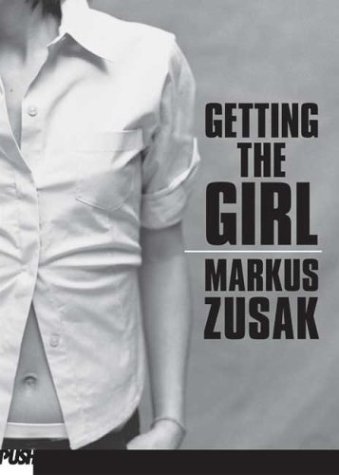
During the few days I was reading “Getting the Girl” by Markus Zusak, I happened to watch the film “Eternal Sunshine of the Spotless Mind” written by Michel Gondry, Charlie Kaufman and Pierre Bismuth.

The similarities are amazing. Both protagonists, Cameron Wolfe and Joel Barish are quiet, reserved individuals who escape into their journals to find meaning in their lives. Both characters fall in love with alternative style girls, Octavia and Clementine respectively, and the stories are interwoven with Neo-surrealist imagery and poetic language.

The “words” that Zusak uses at the end of each chapter exude a strangeness that is poetic and surreal. From page 171: “I imagine myself in a room, where some / shattered pieces are strewn on the floor, / in front of me. […] These pieces on the ground. / Are made of me.”

I really think Zusak’s book would make a great teen movie, especially if a director wove in some of this imagery. It would definitely take the teen movie to new levels, which is something the genre desperately needs. Gondry handled it masterfully in “Eternal Sunshine” and even incorporated images and words from Joel’s journal into the fabric of the narrative.

Wouldn’t it be great to take a great piece of YA literature like “Getting the Girl” and then making it into a cutting edge YA film?

Great book, great film.

Review - 33 snowfish - Adam Rapp

The Blurb: On the run in a stolen car with a kidnapped baby in tow, three kids with deeply troubled pasts and bleak futures struggle to find a place for themselves. They will never be able to leave the past behind. Yet for one, redemption is waiting in the unlikeliest of places.

With the raw language of the street and lyrical, stream-of-consciousness prose, Adam Rapp hurtles the reader into a world of lost children, a world that is not for the faint of heart. Gripping, disturbing, and starkly illuminating, his hypnotic narration captures the voices of two damaged souls - a third speaks only through drawings - to tell a story of alienation, deprivation, and ultimately, the saving power of compassion.

Opening Line: "On top of everything else, Boobie's got the clap."

The Review: “33 snowfish” is at the literary pinnacle of YA fiction. This is a novel that really takes to task some of our expectations about humanity. Physical and sexual violence are part of the lives of these characters, and it is told with brutal honesty and without a hint of sentimentality. He just tells it like it is for the characters he has created: A patricidal arsonist (age 17), a drug addicted prostitute (age 14), and an emotionally damaged former kidnap victim (age 10).

Rapp’s poetic (and often visceral) writing is peppered across every beautiful page and adds so much depth and lyricism to the text that one can get lost in a poetic turn of phrase and almost forget the horrible acts these characters are suffering through and participating in.

I have had a few days to think about this book, and I am still in awe. Rapp understands how to weave realism and lyricism together in a way that is unprecedented. I am saddened that this book has not received more acclaim, it deserves it. One can only assume that because of its violent content and risqué subject matter, it was quietly passed over as a contender for the major awards. This book appealed to me as a writer, and also as a reader.

Something Extra: Adam Rapp and Chris Lynch were interviewed in ALAN magazine by Ann Angel. They discuss violence in YA literature, and the importance of realism in YA fiction.

The Bottom Line: This is one of the best examples of what literary YA fiction CAN be. One of those books where you read it and just think, “Gosh, if only I could write like that…”.

Grade: A+

Exploring the Uncanny Valley of “9”

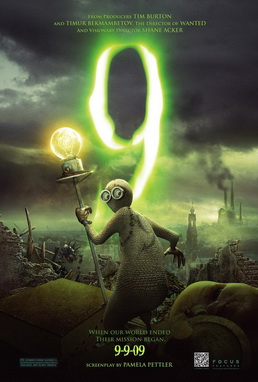
The film “9” directed by Shane Acker was one of the most innovative films of 2009, maybe of recent history. With stunning visual effects and a style that was unique and creative, “9” instantly gained a place in my Film Criticism class, just on visuals alone. But something really intrigued (or bothered) me about “9”. The Uncanny Valley.

The Uncanny Valley is a theory that holds that “when robots and other facsimiles of humans (homunculi) look and act almost like actual humans, it causes a response of revulsion among human observers. The "valley" in question is a dip in a proposed graph of the positivity of human reaction as a function of a robot's lifelikeness.” Basically the Uncanny Valley is when a non-human object takes on human characteristics and either performs them so poorly as to appear garish and unreal, or too well causing an uncomfortable feeling of all too familiarity. It is easy to understand the Uncanny Valley. Compare R2-D2 to Wall-E. Which seems more human? I’d have to argue for Wall-E as he has more “human” qualities. Now compare Wall-E to a Terminator…

In the film “9” we have what Acker calls “stitchpunk” characters that are made up of burlap sack like material and clockwork gears. There are nine characters all together, and *spoiler alert* they are comprised of fractions of the Scientist’s soul (he was their creator, and one of the last living humans). Because these little creatures are imbued with human spirit, they act and behave as fractions of that spirit. It makes one think when boiled down to bare essentials, what are we? One of the more disconcerting scenes is when the burly and brutish character with the designation of “8” is deriving some kind of pleasure from running a magnet over his head. Whether it was like a drug, or sexual in nature, we as an audience quickly learn it was a bad idea, because “8” does not survive the next five minutes. But of all the dystopic scenes throughout the film, Armageddon, skeletons, Matrix-esque robot killers and so on, this scene seemed to disturb me the most. Also the scenes with “6”, the demented artist portion of the group, were also specifically creepy. I think it is due to the fact that these characters are doing some very human things.

Films like “9” can be inspiring for writers because the world of “9” is so rich, that our imaginations begin to fire on all cylinders. But also, the little things, like getting high from a magnet, can make us really consider Character, and how our characters are illustrated and portrayed in our own work. What basic human needs are being fulfilled? Denied? When you see something “uncanny” or disconcerting, it might be wise to explore those feelings, name them, and write them into our work.

The Modernization of the Gothic Romance: Twilight

Stephanie Meyer follows a well known formula in “Twilight”. The Gothic Romance has been around since 1794, and for simplicity, we’ll quote Wikipedia, defining it as “a genre of literature that combines elements of both horror and romance” but part of the further definition that I think specifically applies to “Twilight” is that “Gothic fiction feeds on a pleasing sort of terror” that Meyer really tapped into.  It doesn’t have quite all of the Gothic themes, as Edward wryly asks, “What did you expect? Coffins, dungeons, and moats?” Yes, actually.  However she does stick to the rules for the Gothic novel.  “The literary Gothic embodies an appreciation of the joys of extreme emotion, the thrills of fearfulness and awe inherent in the sublime, and a quest for atmosphere.” Meyer modernized the form with “Twilight” but the classic elements are still present.

Meyer finds extreme emotion in the classic Romance trope, paramour love. Lancelot and Guinevere are probably the most classic best example of paramour love, the secret, excruciatingly passionate love that MUST be denied at all costs. Knights would declare their love for unobtainable noblewomen, and then go on crusades to prove the purity of their love.  Paramour is from the Middle English ‘par amour’, for the sake of love. Bella and Edward definitely (at least in “Twilight”) epitomize this type of love, much like Jake Sully and Neytiri in the movie “Avatar”. Both examples are from different species entirely, yet find a love that is wildly passionate and world shattering. 

I’m not sure if I’d call the vampires in “Twilight” sublime, but she does claim that their beauty is awe inspiring and they are formidable and fearsome.  Bella is certainly dazzled, and so were most of Meyer's female readers.  Her "fearlessness" in face of the sublime vampires is definitely a character trait to which many readers responded.

Meyer uses the “scene in the woods” with Bella and Edward to try and establish some of that Gothic atmosphere.  I think the baseball scene in the film version actually does a better job with atmosphere, but we are talking about the book here.  A creepy old cabin would have really iced the Gothic cake in that scene but then again, she was modernizing things a bit.  The dreary beach scene at La Push also really is a page right out of some of the classic Gothic English fiction.
Quality of the text aside, I think writers would do well to remember that just because a novel might be for modern young adults, modern YA fiction can have classic elements.

A Interview with Daria Snadowsky - Part 1

As part of an ongoing conversation about sexuality in YA literature, I interviewed author Daria Snadowsky about writing authentic sexualtiy in the YA novel general, and specifically in her own work, Anatomy of a Boyfriend. 

As a writer, how do you make a scene involving sexuality authentic? Or to put it another way, how does one write sexuality in a realistic, original, and literary way?

I’m not sure if there’s a bright-line rule for how to write a realistic sex scene because it depends so much on the story, the context, the narrator’s voice, etc. In Anatomy of a Boyfriend, realism was easily achievable because Dom, the main character, is an aspiring doctor. Consequently, Dom naturally thinks in clinical terms and describes situations in an open-minded, unbiased way as if she were performing an experiment on herself and penning a lab report. I’m not sure if the scenes would have worked as is had she not been a scientist.

In your opinion, what is the place of realistic sexuality in young adult literature?

I believe all YA literature is an ideal genre to include realistic depictions of sexuality because many YA readers themselves are beginning to have sexual experiences. And even if they’re “late bloomers,” they’re probably still thinking about sex a lot, so it’s important they have outlets to learn more about it. And since young people are often embarrassed to talk about sex with each other or with their parents, books are a wonderful, private way for readers to satisfy their curiosity and find kinships with nonjudgmental characters.

This type of literature is valuable for teens because it presents much-needed unromanticized accounts of the highs and lows of love and sex. When we grow up on fairytales like Sleeping Beauty and Snow White, it's perfectly natural for us to expect that our first loves will last forever and that we'll know exactly what to do when the lights dim. In contrast, Anatomy of a Boyfriend shows all the humiliation and disappointment and awkwardness (as well as the magic and wonder and peace) that's part and parcel of falling in love and being intimate.

Could you discuss your thoughts about the level of sexuality and detail you used in your book?

I remember back when I was a teenager, I was naturally very curious about "making out." What happens when? What will I feel? What will he feel? What will I be thinking? How do you do everything? Is it instinctual or is it learned? For better or for worse, so many books "fade to black" after the first kiss, so we never see what happens. Or if they don't, the intimacy is often described in very melodramatic, romanticized or euphemistic terms. And that's just not reality. So in this book, I wanted to demystify in an unabashedly honest, non-threatening and sometimes humorous way what occurs, physically and emotionally, during "hooking up." Judy Blume's Forever (1975) serves that purpose to a large extent, but I wanted to get even more detailed and graphic in Anatomy of a Boyfriend. And since Dom never had a sexual experience before, it makes sense that she goes into such a high level of detail when describing her physical experiences because they’re all so new and unexpected and exciting to her.

The social ramifications of sexuality tend to play a large part in the novel, as well as in many YA novels featuring sexuality. Could you comment on how you handled this in Anatomy of a Boyfriend?

Anatomy of a Boyfriend highlights not just the physical elements of intimacy but also the emotional elements, which, unfortunately, are often left out of sex ed classes in school. Dom’s decision to get physical with Wes didn’t just have physical consequences—it affected how she saw herself and her relationships with her family and friends. The most important line of the book is when she wonders to herself, “How is it that mankind can engineer condoms to prevent pregnancy and STDs but not be able to invent some sort of emotional safeguard? Is it even possible to abstain from falling in love?” Dom’s story demonstrates that although sex carries tons of physical risks, if we're careful, odds are we can avoid them. But there is nothing we can do to ensure we won't fall in love or be heartbroken. So for every line where Dom describes what happens to her sexually, I always followed it with an emotional description, because you can't separate the two.

Can you discuss finding a balance between being authentic and sensational sexuality?

Again, it depends so much on other aspects of the story, but I suppose one thing all authentic sex scenes have in common is that they’re not gratuitous--they service the theme and contribute to the characters’ development. In Anatomy of a Boyfriend, each sex scene depicts a sexual “first” and describes Dom’s reaction to it. We never see Dom and Wes do the same thing twice because it wouldn’t really add anything new and would only slow down the pacing.

Thanks, Daria, for your wonderful comments, and your willingness to contribute them. You are truly is an asset to the YA writing community.

Review: Anatomy of a Boyfriend - Daria Snadowsky


The Blurb: Before this all happened, the closest I'd ever come to getting physical with a guy was playing the board game Operation. Okay, so maybe that sounds pathetic, but it's not like there were any guys at my high school who I cared to share more than three words with, let alone my body. Then I met Wes, a track star senior from across town. Maybe it was his soulful blue eyes, or maybe my hormones just started raging. Either way, I was hooked. And after a while, he was too. I couldn't believe how intense my feelings became, or the fact that I was seeing—and touching—parts of the body I'd only read about in my Gray's Anatomy textbook. You could say Wes and I experienced a lot of firsts together that spring. It was scary. It was fun. It was love. And then came the fall. Daria Snadowsky's unflinching dissection of seventeen-year-old Dominique's first relationship reveals all the ecstacy and agony of love, and everything in between.

Favorite Line: “How is it that mankind can engineer condoms to prevent pregnancy and STDs but not be able to invent some sort of emotional safeguard? Is it even possible to abstain from falling in love?”

The Review: Daria Snadowsky set out to present a realistic portrayal of a young woman’s coming of age in Anatomy of a Boyfriend, and she succeeds. Dominique is a character that becomes interested in her own anatomy, after she meets Wes, who literally makes her heart throb. Snadowsky tackles every subject “in a responsible way” according to School Library Journal, from dental damns to orgasms from the female (and male) perspectives and de-mystifies many of the modern issues that Today’s teens are worrying about and dealing with. Snadowsky leaves no emotional stone unturned, either, Dominique experiences a wide range of emotion on her trip of discovery from bliss to crushing, gut-wrenching heartache.

A parallel and modernization of Judy Blume’s Forever, Snadowsky doesn’t allow the story to end during the summer, but takes Dominique off to college and shows the emotions of life “on your own.” A very readable book, with authentic scenes that detail the myriad physical and emotional qualities of young sexuality, Snadowsky gives us a glimpse of the curious, self-conscious, angst-ridden young adult.

I am surprised that this book is still somewhat “under the radar” though it did just come out in trade-paperback. Anatomy of a Boyfriend is bound to raise eyebrows in certain circles, but in the circles that count, (her YA reading audience) Snadowsky is right on the mark. Dominique is portrayed with such innocent curiosity, that it is easy for readers to empathize with her foibles, mistakes, and triumphs. Teens will want more of Snadowsky’s frank, believable narrative.

Something Extra: Whant to build your own boyfriend? You can at Random House here. Snadowsky is one of the many excellent writers that represent the YA market. She was kind enough to answer a few questions via e-mail interview regarding the state of sexuality in YA fiction, and specifically on her book, Anatomy of a Boyfriend.

Bottom Line: Teens (and adults) will devour this frank novel about a young girl and her exploration of sexuality and love, and the ups and downs of life.
Grade: A

Review: Loose Girl - A Memior of Promiscuity by Kerry Cohen

The Blurb: "For everyone who was that girl. For everyone who knew that girl. For everyone who wondered who that girl was. Kerry Cohen is eleven years old when she recognizes the power of her body in the leer of a grown man. Her parents are recently divorced and it doesn't take long before their lassitude and Kerry's desire to stand out--to be memorable in some way--combine to lead her down a path she knows she shouldn't take. Kerry wanted attention. She wanted love. But not really understanding what love was, not really knowing how to get it, she reached for sex instead. Loose Girl is Kerry Cohen's captivating memoir about her descent into promiscuity and how she gradually found her way toward real intimacy. The story of addiction--not just to sex, but to male attention--Loose Girl is also the story of a young girl who came to believe that boys and men could give her life meaning. It didn't matter who he was. It was their movement that mattered, their being together. And for a while, that was enough. Kerry Cohen's journey from that hopeless place to her current confident and fulfilled existence is a cautionary tale and a revelation for girls young and old. The unforgettable memoir of one young woman who desperately wanted to matter, Loose Girl will speak to countless others with its compassion, understanding, and love."
The Review: Author Kerry Cohen bares her soul in Loose Girl: A Memoir of Promiscuity, a book about the juxtaposition of sex and love and how we as humans attempt to make sense of ourselves and the people in our lives. She explores her desire, and the basis for those feelings. A good read for young women who are exploring their identity and how they relate to the opposite sex, and possibly for young men, who are attempting to understand their female counterparts. It made me consider the relationships over the course of my life, and how I have dealt with the situations over the years, from what I knew then, to what I (think I) know now.

The first half of the text is when she was in high school, the majority was from college, and Cohen is a YA author, so readers in their late teens may be able to relate, however this book is marketed for adults.

If it wouldn’t have been a memoir, I am not sure if I would have kept reading. There were moving parts to the book, but often Cohen was trying to explain through introspection why she used ‘boys’ to satisfy her need for love. It was essentially a long psychotherapy session where possibly Cohen worked out her problems on the page for ten years. Quite a bit of telling. Maybe I was looking for details. There were a lot of ‘boys’ and lists of names that really blurred together, and made the tale a little bland and generic. There were only a few instances where I could feel her fire and passion, and the rest was just washed over.

*spoiler alert*? She never really explores her past from a position of knowledge. I think it was a missed opportunity, the “I understand now, it was like this, but back then I didn’t understand…” I wanted to see and KNOW that she now understands. But maybe the need for male attention, like other types of addiction is always lurking under the surface. Her transition into the whole person she is know, is only realized in the last few pages. I wanted more.

I can see how this would appeal to certain people, maybe those who are naturally introspective, and the issues she deals with are very real.

Something Extra: Her website is excellent, and her Q & A With Kerry Cohen interview and the responses from readers are powerful. This book definitely has a strong appeal for many women. "Adolescent promiscuity is epidemic, but no one talks about why. [...] That old dichotomy of the slut and virgin is still alive and well."

Bottom Line: It takes a lot for someone to reveal themselves in this way and expose themselves to the world in such an intimate fashion. The book is worth reading for that aspect alone. Though I wanted more, it caused some deep introspection of my own life, for which I was surprised and grateful. Cohen's book opens a conversation that is long overdue.
Grade: B-

Review: Nick & Norah's Infinite Playlist by Rachel Cohn and David Levithan

The Blurb: “It all starts when Nick asks Norah to be his girlfriend for five minutes. He only needs five minutes to avoid his ex-girlfriend, who’s just walked in to his band’s show. With a new guy. And then, with one kiss, Nick and Norah are off on an adventure set against the backdrop of New York City—and smack in the middle of all the joy, anxiety, confusion, and excitement of a first date. This he said/she said romance told by YA stars Rachel Cohn and David Levithan is a sexy, funny roller coaster of a story about one date over one very long night, with two teenagers, both recovering from broken hearts, who are just trying to figure out who they want to be—and where the next great band is playing. Told in alternating chapters, teeming with music references, humor, angst, and endearing side characters, this is a love story you’ll wish were your very own. Working together for the first time, Rachel Cohn and David Levithan have combined forces to create a book that is sure to grab readers of all ages and never let them go.”

The Review: Rachel Cohn and David Levithan capture the reality of teenage life in Nick & Norah’s Infinite Playlist, and focus on deep characters from a male and female perspective. Nick and Norah have interesting lives, and as the evening unfolds for them, their lives and choices unfold for the readers. I loved Norah’s independent power, and Nick’s softer self-deprecating side.

Personally, I enjoyed seeing teens at this level. Nick and Norah have already been sexually active, prior to the storyline. They had made choices about drugs and alcohol, and decided for themselves that there really isn’t anything interesting about them. So now what? Now that these traditional hurdles have been overcome, the authors show us a night that changes the lives of their characters, one that is emotionally charged with excitement, sexual tension, decisions, and emotional angst and healing. Nick and Norah have to apply their prior knowledge in new ways, get over their emotional baggage, and determine how to proceed with a new love interest. By providing the reader with both perspectives, Nick & Norah is an excellent read for older YA readers, and adults.

This book struggles with some parents, and in some classrooms and school libraries, because of the language component. Levithan peppers the sections from Nick’s point of view with so many explicatives that they virtually become meaningless. I tend to think that because they make good choices throughout the book, and appear to have made them in the past, that this makes up for the language issue. Nicholle has argued that trading one vice for another is still a vice. She may have a point, but in a market overpopulated by books featuring teens behaving badly, it is refreshing to see teens making good choices. Levithan's opinion? "Who the f&*$ cares if characters use the word f&*$?It harms no one."

So blah, blah, blah, movie. It was PG-13, and the language and “feel” of Nick and Nora’s Infinite Playlist definitely leans toward an “R”. Levithan’s narrative alone would have garnered an “R” rating. A great book for older YA readers was turned into a feel good movie for tweens. A movie that could have been like Superbad, Nick & Norah was turned into something akin to a grittier High School Musical.

Something Extra: Cohn and Levithan were interviewed in 2006 by blogger Little Willow. Their comments offer insight to the novel, and to attitudes about YA fiction in general. (Incidentally, they love the movie. Hmmmm.)

Bottom Line: A excellent read, and a great representation of life in the big city. These teens make good choices, applying their life experience for the better. Popular enough to turn into a film, and now just a piece of flotsam in the fantasy flooded YA market, this book will make you wonder why there aren’t more books out there like Nick & Norah.
Grade: B+

Review: The Absolute True Diary of a Part-Time Indian by Sherman Alexie

The Blurb: “In his first book for young adults, bestselling author Sherman Alexie tells the story of Junior, a budding cartoonist who leaves his school on the Spokane Indian Reservation to attend an all-white high school. This heartbreaking, funny, and beautifully written tale, coupled with poignant drawings that reflect the character’s art, is based on the author’s own experiences and chronicles the contemporary adolescence of one Native American boy as he attempts to break away from the life he seems destined to live.”

Favorite Line: “The world, even the smallest parts of it, is filled with things you don’t know.”
And: “But, you should approach each book—you should approach life—with the real possibility that you might get a metaphorical boner at any point.”

The Review: The Absolutely True Diary of a Part-time Indian by Sherman Alexie was one of the best reads all year. This “illuminated novel” can stand on its own, without the graphics (however they are hilarious). If only all all people could look at the world the way Gordy does in these two lines (above), as he teaches Junior to do throughout the novel. It really makes one stop and think. "I don't know everything. Even the smallest things and places have mysteries. I should be excited about life, and every thing this world has to offer."

This book deals with issues of friendship, independence, racism, loyalty, minor sexuality, relationships, family, and personal education. Also, the book is challenged in many schools. Why? Masturbation. Anytime masterbation (well and the word 'boner") is even mentioned in a book, people want to ban it. I have read two articles about banning this book recently and it just sickens me that ignorance still has influence in our society.

Alexie has been honing his craft with adult novels and books of poetry for years, and it shows in this blockbuster debut in the realistic YA fiction genre. His wordsmithing is amazing, and Junior's voice comes though the text and it feels like you know these characters personally when you are done. I think maybe that is why I am obsessed with the audio version and audio interviews with Alexie, because part of me really wants to meet the man that Junior is based upon.

Something Extra: A delight to listen to on audio, because Alexie reads it himself! (And garnered an Odyssey Award for it!) A great way to connect with an author is to listen to them read from their own work, and here Alexie becomes Junior. Also, you can purchase a great interview with Alexie and David Levithan on itunes. Oh yeah, he's writing Book II, Junior, Gordy, and Rowdy's sophomore year, right now! Check out this amazing interview:


The Bottom Line: The Absolute True Diary of a Part-time Indian won the National Book Award, and has won more awards than you can shake a stick at. This book is an excellent choice for male readers, and features a comraderie that will touch your soul. A pleasure to read and listen to on audio, buy both!
Grade: A+

Review: Stoner & Spaz by Ron Koertge

The Blurb: “For sixteen-year-old Ben Bancroft -- a kid with cerebral palsy, no parents, and an overprotective grandmother -- the closest thing to happiness is hunkering down alone in the back of the Rialto Theatre, watching Bride of Frankenstein for the umpteenth time. Of course, the last person he wants to run into is drugged-out Colleen Minou, resplendent in ripped tights, neon miniskirt, and an impressive array of tattoos. But when Colleen climbs into the seat beside him and rests a woozy head on his shoulder, Ben has that unmistakable feeling that his life is about to change. With unsparing humor and a keen flair for dialogue, Ron Koertge captures the rare repartee between lonely teenagers on opposite sides of the social divide.”

The Review: Ron Koertge's book Stoner & Spaz is perfect for the YA audience. Published five years before Nick & Nora's Infinite Playlist it is every bit as good, and has entertaining characters in Ben and Colleen. It is definitely a coming of age novel, dealing with issues including independence, diversity, sexuality, drug and alcohol use, responsibility, and all this from the more rare male perspective. Colleen is the center around which everything in her life revolves, and she helps Ben grow up to his own potential. The concept that teens can have more of a life than just playing video games and munching Doritos is portrayed by Ben’s love for film, and through his quest to make one.

Being familiar with Koertge's writing style, and having visited with him on a personal level and taken workshops and lectures from him, it is interesting to see his work play out in published form. Some of the techniques that he uses to randomize his prose make parts of the novel feel natural and fresh. He does so many things right in this book; he effectively eliminates parental involvement in the plot, and uses Colleen as a foil for Ben and shows his growth against her static position. Koertge turns Ben from a character always in need of assistance and care, into a care provider. Very compelling.

*spoiler alert* An interesting point, Koertge does a “fade to black” when it comes to the actual sex act, but with credit is very frank until that moment. But he chooses not to write about the moments afterward, the scene to follow doesn’t exist here. My YA readers are very savvy and well read, and they were disappointed in this one regard. They wanted to see the reactions of the characters, and the ramifications of their actions. This is definitely played out on a more public scale in the end, but I think they were looking for something more immediate. Stoner & Spaz was published in 2002, which means it was probably written in 1999. There’s been ten years of realistic YA Fiction published since then. Times, they are a-changin’.

Something Extra: A Sequel! Yes, Ron is currently writing a second book with the characters from Stoner & Spaz. It was a treat to talk with Ron about the new book he’s writing. “I kind of thought Colleen’s story was finished and I was just going to follow Ben.” Then he smiled and said, “But Colleen is so interesting, the plot would seem to lag when I would try to cut her out of it, so she’s back!” He just shrugged, grinned with a “I do what I’m told” look, and wandered off to his faculty room during residency to write a few more pages. Can’t Wait! Also, if you want to get a feel for Ron's personality, read his interview with Sara Erwin at The Book Source.

Bottom Line: This was an ALA Best Book for YA and an ALA Quick Pick. It left me feeling that the world was Ben’s oyster and it was extremely well crafted as to how it all unfolds. Definitely a must read, but you will probably have to pick it up online, as it is a bit older and hard to find in most brick and mortar shops.
Grade: A

Should YA Books be Content-Rated Like Movies and Video Games?

These comments were originally posted at Nathan Bransford's blog, in response to his question "You Tell Me: Should Children's Books be Content-Rated Like Movies and Video Games?"

As a high school teacher for over ten years, I inevitably have students come back and visit me after I have had them in class. They often tell me “This book changed my life.” That is a powerful statement. Yet that is how we all were at that age. We experienced life changing events on a regular basis in high school. First car, first kiss, first fist fight, first drink, first bouts of depression.

I teach mostly freshmen, ages 14 or 15-year-olds. What if the book that “changed his or her life” was denied that reader because it was rated for +16 and up? Or “R”? Books can show teens that there are alternatives out there, and that the world is wide. Do books save kids from suicide? Do books encourage sexual behavior? Studies show that this really is not the case. Yet, by being presented with the vicarious experiences that some students enjoy when reading YA “problem novels” they can make their own decisions which are based on the moral and ethical codes that they have been brought up with.

When was the last time someone said to you, “This video game (movie) changed my life!” The reading experience is much different than the viewing experience. When you are viewing something, you are watching someone else’s interpretation of events. When you are reading you are interpreting those events for yourself. There is a reason why most people believe that when a film is made from a book, it is a far inferior experience. It is not one's own. The caveat to this argument is that music albums have lyrics that are moving and meaningful and are sadly labeled.

There is no substitute for paying attention to what your kids are reading, watching, playing, and listening to. Parents are the gatekeepers for their own children, not some industry or government agency scapegoat. Allow the gate to remain open.

Review: Story of A Girl by Sara Zarr

The Blurb: "When she is caught in the backseat of a car with her older brother's best friend - Deanna Lambert's teenage life is changed forever. Struggling to overcome the lasting repercussions and the stifling role of "school slut," she longs to escape a life defined by her past.
With subtle grace, complicated wisdom and striking emotion, Story of a Girl reminds us of our human capacity for resilience, epiphany and redemption."


My Favorite Quote: "They never tell you this part in sex ed, how to talk about what you did and why you did it and what you thought about it, before, during, and after."

The Review: In a nutshell, this is what all realistic YA fiction that deals with sexuality is about, and why YA readers read books like Story of a Girl by Sara Zarr. They want answers to these excruciatingly important questions. The social ramifications of developing one's sexuality is constantly present in the average YA reader's life. The story is about a quiet girl who made what she (and her father) considers a mistake when she was in 8th grade, and it is haunting her still, almost three years later, because no one knows how to talk about it.

Zarr portrays the complex family with ease, giving each of her characters a position to operate from, and for the most part allows them to change though the book. Zarr was able to convey feelings of despiration that many teens (and adults) can empathize with, and when the lead character Deanna was falling into her old trap again I was genuinely panicked. I didn't want Zarr to let me down, and she held up her end of the bargain.

I did find the book "tamer" than I expected, and thought the family drama was a bit high for my taste (only because it was everpresent), and the additional -Story of a Girl- sections seemed like a trope that was tacked on and a bit unnecessary.

Something Extra: Sara Zarr also appears to be one of the few authors that regularly updates her blog. At her website there is a treasure trove of material about her and her writing. And there is a great interview with Zarr by Ellen Papazian at Bitch Magazine.

The Bottom Line: With the over-all literary and thematic elements of family, sexuality, responsibility, religion, and coming of age, it was easy to see why Story of a Girl was a National Book Award finalist for Young People's Literature. An excellent read, from an excellent author.
Grade: A-